Ministry's own modelling put failure rate for NCEA replacement as high as 45%
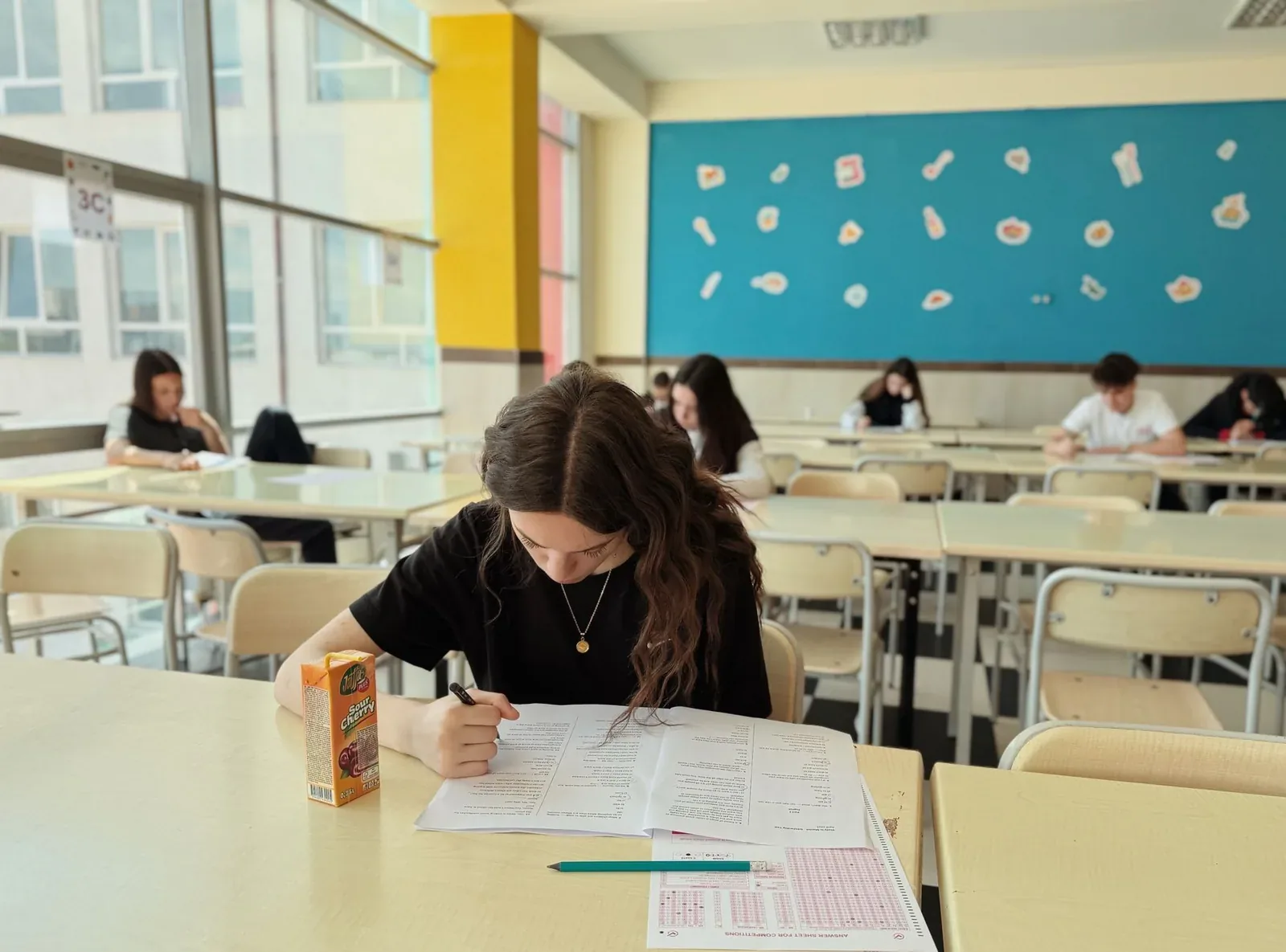
The Education Ministry's early modelling of the qualification that will replace NCEA found that between nearly 30% and 45% of Year 12 students could fail it. Today, a little over 15% of Year 12s attempting NCEA Level 2 don't pass.
The secondary teachers' union, the PPTA, got the documents under the Official Information Act, RNZ reported. The union says that means about 10,000 more teenagers leaving Year 12 without a qualification in the optimistic case, and 19,000 more in the pessimistic case. Earlier this year RNZ reported that 19% of last year's school-leavers had no formal qualification at all. That is one of the highest figures since NCEA was introduced.
At Year 13, the document estimated the failure rate could rise from about 15% under NCEA Level 3 to about 25% in the best case, or about 35% in the worst.
In the third of schools serving the poorest communities, RNZ reported, Year 12 pass rates could fall from about 75% to just over 50% in the optimistic case, or to about 25% in the pessimistic one. At Year 13 in those schools, pass rates could fall from nearly 80% to about 55%, or to about 35%.
The ministry told RNZ the work was "early scenario-based modelling to explore possible outcomes to help inform implementation planning", adding: "These figures are not a forecast or prediction of future attainment rates." The estimates assumed that a student with 14 credits in an NCEA subject would also pass that subject under the new system. They left out industry-led vocational subjects because those subjects did not exist yet.
But the ministry's own document said "the risk of decreased attainment for at least the first few cohorts could be high, as they will not have had the full benefits of the new curriculum and additional supports." It also said the changes could lead some students to disengage from school earlier.
The PPTA's release quotes officials' advice to Education Minister Erica Stanford: "At least initially more students would leave school without any formal qualification... This means the proposed changes could also lead to worse post-school outcomes for some students." The union says officials warned her in May last year of a "potential significant drop in attainment", and that the projections were "hidden for nearly 18 months".
Under the new system students must study at least five subjects a year and pass at least three, the Herald reported. The ministry ran its modelling first in 2025, then again in April this year to compare a three-subject requirement with a four-subject one. Pass rates under four subjects were even worse, and the Government went with three. On equity, the document called three subjects "effectively equivalent to the status quo", and said it was "likely to be motivational, credible and easy to understand... but some may see it as not aspirational enough."
Stanford told RNZ in a statement that the Government had "deliberately required students to pass three subjects rather than four", given schools an extra year of lead-in time and was "making significant investments in support". "We make no apologies for raising standards," she said.
According to the PPTA, Stanford dismissed similar modelling that the economics firm BERL did for the union as "disgusting" and "scaremongering". The union says the ministry's figures back BERL up.
BERL measured something different: it looked at students who passed Level 2 in 2025 and asked whether their credits fell across at least three recognised subjects. For 14,930 of the 46,165 who passed, or 32.3%, they did not, the Herald reported. The share was 48.1% for Māori students who passed and 42.6% for Pacific students, against 30.5% for European and 22.4% for Asian students. At schools in more disadvantaged communities, 55.9% of those who passed were potentially at risk. At schools facing fewer socioeconomic barriers, it was 18.4%.
BERL put the cost of making the change at $49.2m to $57.8m across 487 secondary schools. Between 70% and 74% of that would go on relief teachers. Papakura High School principal Simon Craggs told the Herald his school would have to overhaul its timetable. Many of its courses could no longer run because they combine standards from different subjects.
The ministry told RNZ the qualification will be phased in from 2028 to 2030 and aligned with the new curriculum. Teachers will get training and resources, and advisory groups will look for problems early. The Herald reported that the ministry is working with Industry Skill Boards on industry-focused subjects, with $15m from Budget 2026.
PPTA president Chris Abercrombie told RNZ: "We've pretty much got no confidence in the mitigations." He said "the minister just seems to be going on vibes", and that the policy would "be running the equity gap on steroids".
The documents come out with the 7 November election nine days away.
Sources
- Thousands more could fail new school qualification (RNZ)
- Thousands more could fail new school qualification (NZ Herald)
- Government confirms tens of thousands of young people will pay price of qualifications reform (PPTA)
- NCEA replacement: 14,930 Level 2 students could miss out under reforms, new research finds (NZ Herald)