2degrees returns to profit as it seeks approval to merge its mobile network with One NZ's
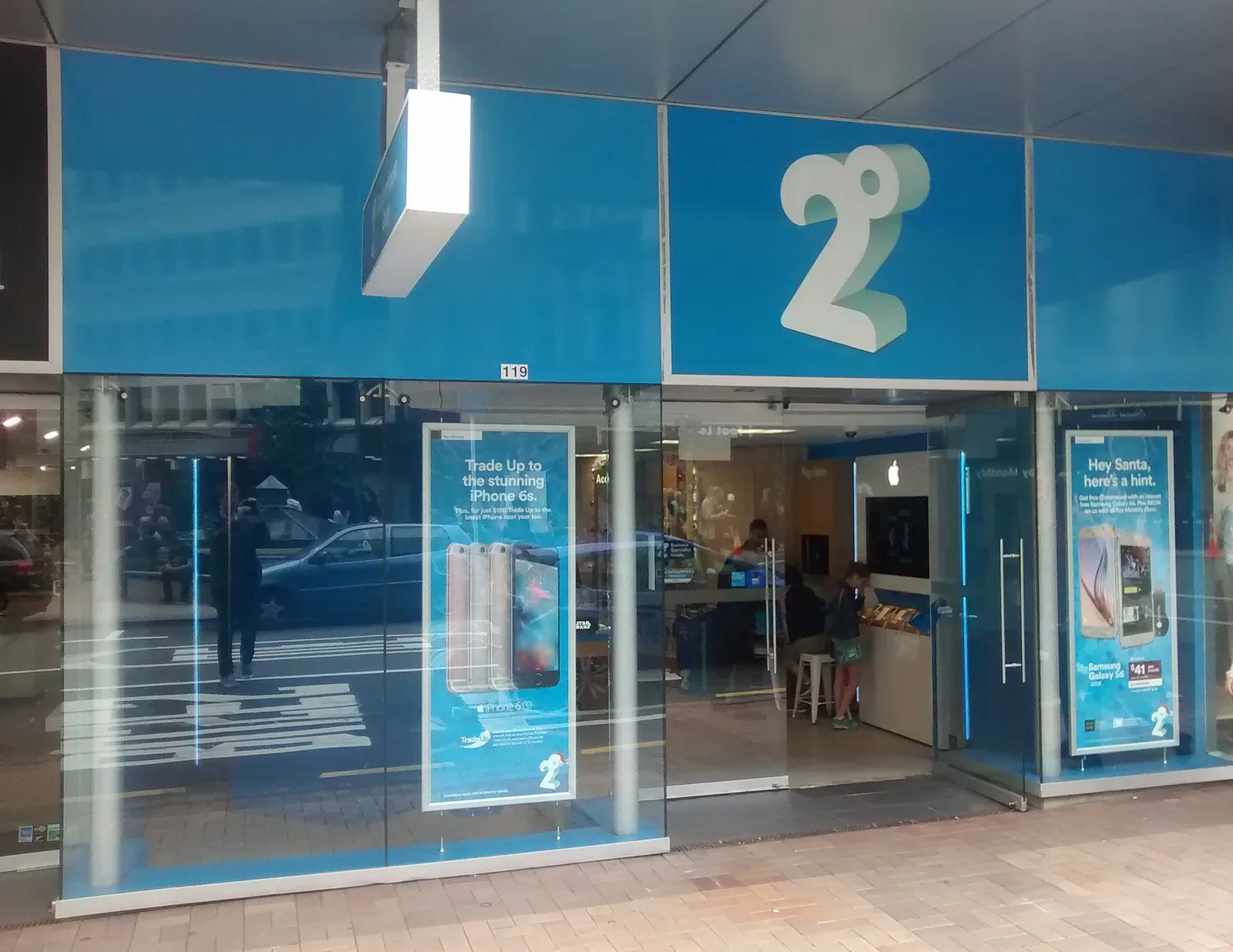
2degrees made a net profit of $17.2 million in the year to June 2026, B2B News reported, after losing $18.2 million the year before. The result comes as the company asks regulators to let it put its mobile radio network into a joint company with One NZ.
NBR reported a higher figure, a net profit after tax of $27.4 million. B2B News says the gap comes from different treatment of non-cash items. This article uses the $17.2 million figure.
According to B2B News, revenue rose 5.5% to $1.46 billion, the fourth straight year of growth. Mobile revenue climbed 4.3% to $603.3 million and broadband revenue rose 1.1% to $437 million. Earnings before interest, tax, depreciation and amortisation grew 6% to $421.1 million.
Most of the turnaround comes from the 2022 merger with Orcon and Vocus. FY2026 was the first full year without integration costs, B2B News reported, and chief executive Mark Callander said the company was "seeing the benefits of the merger flow through". Staff numbers fell by 80 to 90 over the year to about 1,600, with no formal restructure. Spark, by contrast, cut 627 jobs in FY2025.
2degrees is also winning broadband customers. Commerce Commission monitoring figures cited by B2B News show its share rising from 18% to 20% between 2023 and 2024. That took it past One NZ, on 19%. Spark leads with 35%.
Callander said the past six to eight weeks had "felt pretty good", pointing to the Apple launch and "a lift in enterprise and business decision-making".
The bigger change for customers is RANCo. Under the plan announced in late August, 2degrees and One NZ would move their radio access networks into a wholesale company owned 50/50 by the two. These networks are the antennas and base stations that phones connect to. Both telcos would buy capacity back from the new company. Each would keep its own spectrum, core network and backhaul, and they would still compete for retail and wholesale customers, B2B News reported.
The two already share radio equipment on a smaller number of sites under a commercial arrangement, according to the Herald.
Their argument is about money spent twice. "Instead of duplicating investment where it adds little customer value, we can invest more effectively in extending and improving the network," Callander said, as reported by the Herald. Nick Judd, One NZ's incoming chief executive, said RAN sharing was already common overseas and would enable "faster access to new technologies such as 6G" while "improving overall network resilience."
The deal needs approval from the Commerce Commission and the Overseas Investment Office, the Herald reported. The companies want it finished in the first half of 2027. One NZ is wholly owned by NZX-listed Infratil. 2degrees is owned by Voyage Australia, a joint venture Macquarie and Aware Super formed to buy the telco in 2022.
Spark chief executive Jolie Hodson said the proposal appeared to extend the existing arrangement between the two, "but if approved will mean New Zealand will move from three to two radio networks, which will need to be considered carefully."
The three big carriers hold 97.5% of the residential mobile market, B2B News reported, a share that has slipped just 1.1 percentage points in five years. Mobile virtual network operators, the smaller brands that rent capacity on a big carrier's network, have grown from 1.6% to 2.5%. Their subscriber numbers are up 61% to 171,000.
If RANCo goes ahead, One NZ and 2degrees customers would still get separate brands, plans and prices. But wherever the joint network runs, their phones would connect through the same antennas. Better coverage would stop being a reason to switch between the two. For businesses choosing a carrier, the real choice of radio network would come down to Spark or the joint company.
Spark, One NZ and 2degrees already jointly own the Rural Connectivity Group, which was set up to build shared cell towers in remote areas under the Rural Broadband Initiative, the Herald reported. Sharing in places where one network barely pays is well established. RANCo would go further, taking sharing beyond remote areas and leaving Spark out.
A year ago, a loss-making 2degrees could have argued it needed to share costs to keep competing. 2degrees now makes money, is growing revenue and has overtaken One NZ in broadband. One NZ is not a weak partner either. Infratil's 2026 investor day claimed One NZ took roughly 58% of total mobile market growth over two years, according to B2B News. The case for RANCo now has to rest on what customers get from it: the network extension Callander promises and the resilience Judd describes.