Julian Wilcox takes the chair at Te Taura Whiri, and also sits on the Whakaata Māori board
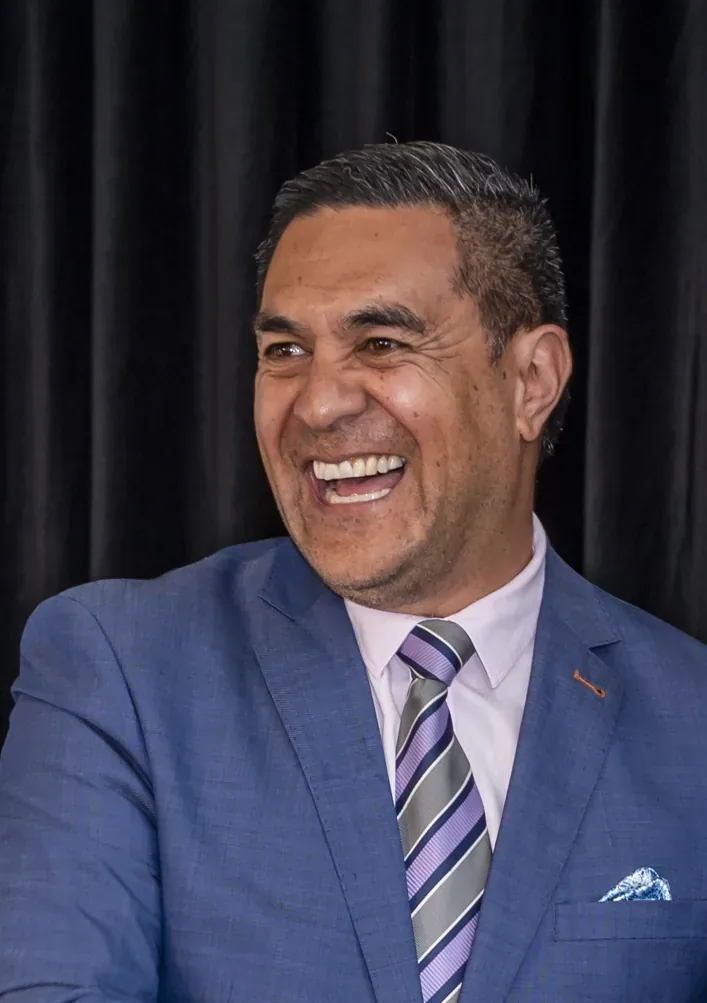
Julian Wilcox became chair of Te Taura Whiri i te Reo Māori, the Māori Language Commission, today, 5 October, for a three-year term, RNZ reported. He replaces Professor Rawinia Higgins MNZM.
Acting Māori Development Minister Shane Jones confirmed the appointment. He said Wilcox brought "a deep knowledge and practice" of te reo Māori, strong governance skills and a record of leadership in both Māori and public-sector settings, RNZ reported. "The Māori Language Commission plays a vital role in supporting and promoting te reo Māori," Jones said. "Dr Wilcox's expertise and longstanding commitment to the Māori language makes him exceptionally well-placed to guide its ongoing work." RNZ also quoted the commission's chief executive, Ngahiwi Apanui, who welcomed Wilcox and said his experience leading organisations and working at governance level would be "a tremendous asset" to Te Taura Whiri.
The background on Wilcox and on the Maihi Karauna targets below comes from Te Ao Māori News. Wilcox has more than 20 years in Māori broadcasting and language revitalisation. He also has a background in financial strategy and governance. He has been chief operating officer of Ngāi Tahu and has held senior advisory and executive roles.
His own statement, carried by Te Ao Māori News, was in te reo: "Kua roa ahau e arohanui atu ana ki tō tātou reo, ko te tūmanako rā ia ka riro mā tērā aroha anō aku mahi katoa e ārahirahi i roto i ngā tau e haramai nei." Roughly: I have loved our language deeply for a long time, and my hope is that the same love will guide all my work in the years ahead.
Wilcox was also recently appointed to the board of Whakaata Māori, the national Māori broadcaster.
Wilcox treats the two roles as connected. He told Te Ao Māori News the two boards, along with the other agencies working under the Maihi Karauna, the Crown's Māori language strategy, can strengthen efforts to revitalise te reo. He also said whānau, hapū and iwi have a central role in making the language part of everyday life in their own communities.
Neither report says how he will split his time between the boards or what he plans to do first.
The targets he inherits are steep. The Maihi Karauna goals for 2040 are at least 85 per cent of New Zealanders valuing te reo Māori as a key part of national identity, at least one million able to talk about basic matters in the language with confidence, and 150,000 Māori aged 15 and over using te reo as much as English. The last is the hardest. It asks for a language that's used at home, not just valued in principle.
Higgins leaves after about eight years in the chair. She joined as a commissioner in 2015 and became Toihau, or chair, in 2018, according to Apanui. He called her "a tireless advocate for te reo Māori, helping to strengthen its status, visibility and use across Aotearoa and on the world stage." Jones thanked her for what he called distinguished leadership and a significant contribution to the language's revitalisation.
Wilcox joins a line of chairs that includes Tā Tīmoti Kāretu, Tā Kingi Ihaka and Tā Patu Hōhepa, as well as Higgins.