Moriori Language Week returns, still without official status
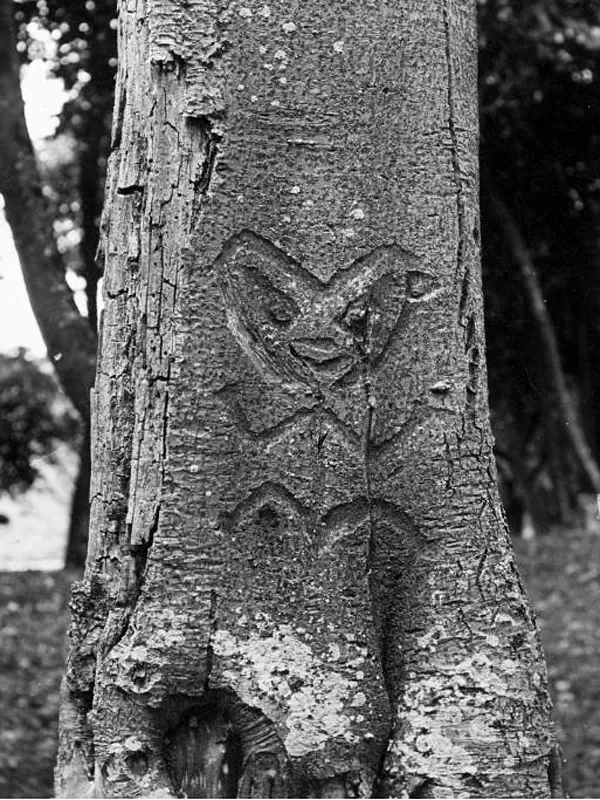
Elders on Rēkohu, the Chatham Islands, opened the second Ta Wik’ a Ta Rē Moriori (Moriori Language Week) this week. They shared kai with hūnau, made artwork and played bingo using Moriori words. The week runs from 12 to 18 October. The Hokotehi Moriori Trust held the first language week in 2025, and like that one, this week has no official recognition.
The trust has petitioned for an official Moriori language week in previous years. Te Ao Māori News, the news service run by Whakaata Māori, reported on 14 October that those petitions "have not yet succeeded", but neither that report nor the other published coverage says who turned them down, when, or how.
The trust's chair, Hayden Preece, told Te Ao Māori News the week doesn't need anyone's sign-off. "Political times are a bit tough in many different facets of politics, but we've acknowledged it and that's all that matters," he said. "We know it's our language and we're proud to celebrate it and we don't need anyone to tell us that it's an official language."
He also had a message for whoever wins the 7 November election: "It's only a matter of time before it's acknowledged as an official language week, I'm sure. No pressure incoming government."
The Crown isn't absent, though. Preece said most of the money came from the trust itself, with help from Te Mātāwai and Te Puni Kōkiri. Schools and libraries are taking part. Ashleigh Ryan, a Moriori descendant who works with the trust, said government agencies have been contacting her for screensavers and resources. "It's quite promising to us that they are definitely on board with the language week," she told Te Ao Māori News.
The week reaches well beyond the islands. Te Ao Māori News lists a dawn ceremony in Christchurch, wānanga around the country and online language sessions. This year the trust released a 148-page Moriori activity book nationwide. It promotes the Ta Rē Moriori dictionary, which is now online. The trust's own release adds events at Kōpinga Marae and an offer of support to hūnau who want to run their own activities.
The trust is asking for small steps, not fluency. "You don't have to be fluent to be part of this," Preece said in the release. "Learn one kupu [word]." Ryan described the aim in similar terms: for tchimirik' (children) to have "even if it's just a handful of tukupu [words] that just comes naturally to them."
Alan Harvey, a Moriori elder, said it may be too late for him to become fluent. "It should have happened a long time ago but regardless it's happening now, and I think we're going forward in leaps and bounds," he said. "Give us another 10 years and we will take these little ones right now and how they will develop with the Tā Rē."
A Crown apology, signed by Andrew Little, then minister for Treaty of Waitangi negotiations, and dated 14 February 2020, hangs at Kōpinga Marae. In it the Crown says Ta Rē Moriori had been lost as a living language by the start of the 20th century, and apologises for its failure to actively protect it. It also apologises for spreading the false history that Moriori were extinct and racially inferior, Garritt C. Van Dyk of the University of Waikato writes in a piece for The Conversation.
Schools taught that falsehood. In July 1916 the New Zealand School Journal published "The Passing of the Mouriuri". A corrected set of journals didn't appear until 2010, Van Dyk writes.
Hirawanu Tapu, one of the last native speakers, died in 1900. With Moriori elders he had prepared a 131-page petition to Governor George Grey. More than a century later, the University of Auckland and the trust have worked together to rebuild the language's grammar from historical documents such as this petition.
Van Dyk also mentions another piece of unfinished business. The Rangihoua Waka, a double-hulled canoe found on Rēkohu in 2024, has been radiocarbon-dated to 1440–1470. The government has said there is no funding to complete the excavation.