Kiwi edges up as markets take close election in their stride; Westpac says larger reaction may follow 27 November results
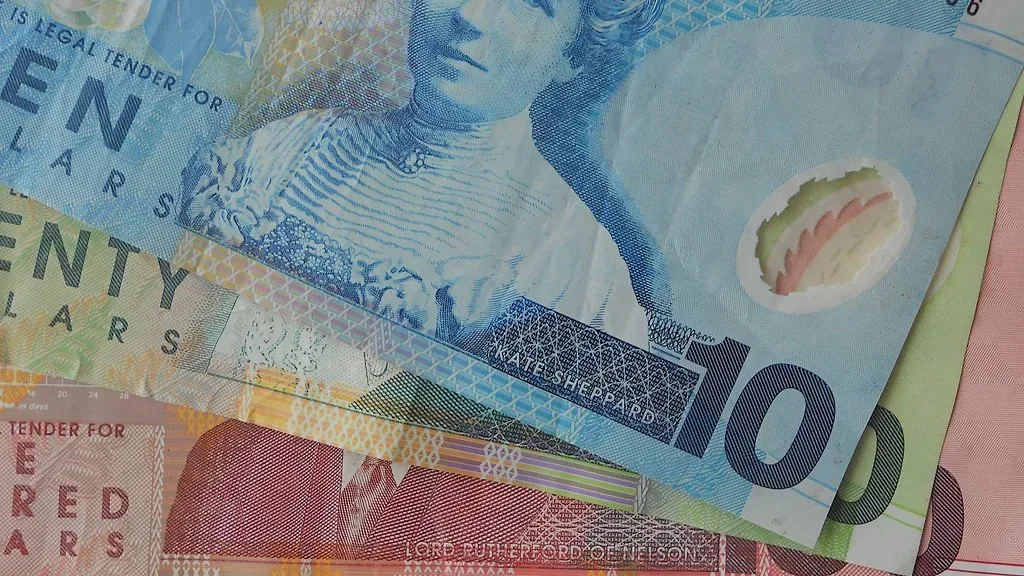
The New Zealand dollar barely moved on Monday, the first trading day after Saturday's close election. Westpac called the market's response "muted".
The kiwi was buying 55.57 US cents at midday in Wellington, BusinessDesk reported, up from 55.47c late on Friday. The Herald had it at US55.92c by the close. Against the Australian dollar it closed at A81c, a cent above Friday's A80c.
In comments carried by BusinessDesk, Imre Speizer, Westpac's head of NZ strategy, said the small move was "unsurprising given polls had correctly indicated a very close race, so that an uncertainty discount had been baked into the NZD which can be only partially unwound today". Traders had already sold the currency down before the vote.
The bigger force on the kiwi is still the US dollar. BusinessDesk said it rose late on Friday, New Zealand time, after US payrolls beat forecasts and US consumer sentiment hit a three-month high in early November.
Craigs Investment Partners' Mark Lister welcomed the calm. "There was no real panic, no air of uncertainty – that's what we want out of the financial markets," he told the Herald. "We don't know the result [of the election], but the current coalition is in the box seat to form a government."
Interest rate markets were just as quiet. BusinessDesk said swap rates and New Zealand government bond yields moved largely sideways. Banks use swap rates to price fixed-term mortgages, so borrowers looking to refix saw no election shock on Monday.
Speizer didn't expect one. "We wouldn't expect to see much of a reaction in swap rates given the limited impact on monetary policy, although NZGB spreads to swap could decline if the right bloc maintains its majority," he said.
ANZ, quoted by the Herald, said National and Labour campaigned on similar fiscal plans and committed to the same limits on new day-to-day and capital spending in coming Budgets. The open question, ANZ said, is whether coalition partners' promises can be paid for without raising those limits.
Oil may matter more for prices than the election did. Brent crude fell more than 9% to US$94.12 a barrel on hopes of a US-Iran resolution, b2bnews reported. Cheaper oil eases some of the pressure on pump prices and on December-quarter inflation.
Sharemarket investors had stayed calm in the run-up to the vote. The NZX hit a record high on Thursday, then slipped just over 0.5% to 13,998 on Friday, the day before the vote, b2bnews reported.
On Monday, company news drove the biggest moves. Ventia Services fell $1.43, or 19.51%, to $5.90 after warning that second-half revenue for the 2026 financial year would come in below the same period a year earlier, citing tough trading in telecommunications and energy, the Herald reported. ANZ Group fell $1.40, or 2.84%, to $47.85 after its result. Mainfreight, which reports its half-year result this week, fell 49c to $67.01.
Risks to business remain. Forsyth Barr's Aaron Ibbotson said international investors would not welcome talk from both sides of splitting up the power companies, Newsroom reported.
Some warnings came before the vote. Sean Keane, chief strategist for Asia Pacific at JB Drax Honoré, said a change of government with significant Greens representation could see the dollar "sell off sharply" on expectations of higher taxes and more intervention, b2bnews reported. BNZ's pre-vote outlook said "a right leaning government should not change market pricing", while a left-leaning one "may" steepen the yield curve.
Nothing is settled yet. About 400,000 special votes are still to be counted, and they could overturn the election-night result, Newsroom reported. Final results are declared on 27 November, BusinessDesk reported.
Speizer said a larger reaction may ensue once those final results are declared. That is because, historically, the kiwi declines ahead of an election and recovers afterwards, he said.
Even 27 November may not end it. Newsroom noted that in 2023 it took 41 days from election night to form a government.
Mainfreight managing director Don Braid summed up the mood in business less politely than the markets did. "What a shambles!" he told Newsroom. "However, we will be staying positive and getting on with business as usual ignoring the politics and focusing on looking after our people and our customers."