Tāwhaki returns to Manutūkē from Munich, on loan but expected to stay
Tāwhaki, a carved ancestral pou missing from Whakatō Marae since the late 19th century, is coming home from Munich. Te Ao Māori News reported on 16 October that he will arrive at the marae in Manutūkē, about 14km west of Gisborne, on 24 October.
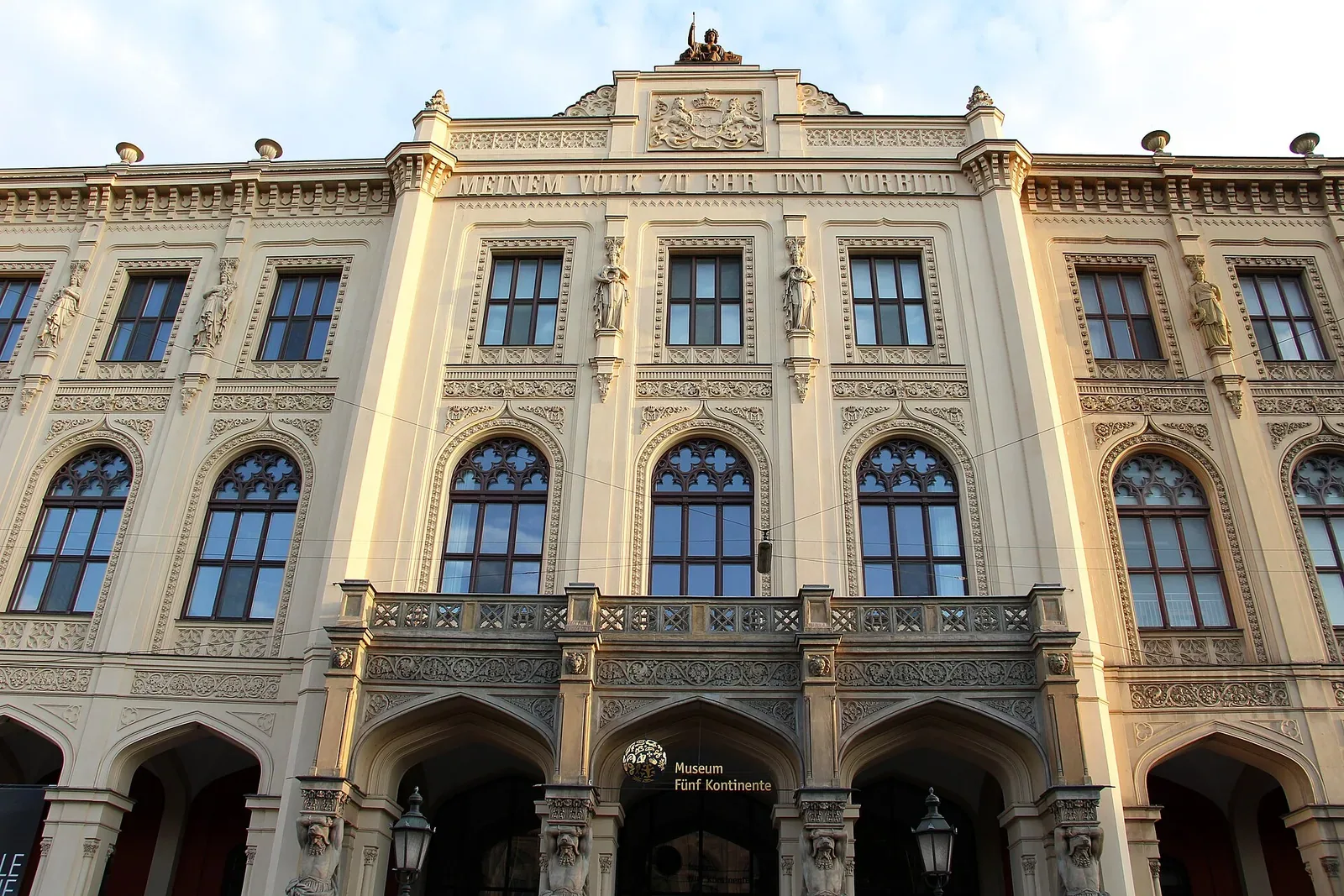
He is coming back from the Museum Fünf Kontinente on permanent loan; the Munich museum still owns him. Tairāwhiti Museum director Tapunga Nepe told Te Ao this is a standard museum arrangement, and that he is confident Tāwhaki will stay with his uri for good.
Tāwhaki is the second taonga to come home from Germany to Te Tai Rāwhiti this year, and the first went differently. Te Pou o Hinematioro returned home from the University of Tübingen in April, after kaitiakitanga was formally signed over to Te Aitanga a Hauiti, the iwi of Uawa, on 29 March, Te Ao reported. "Everybody [wanted] her to go home - it was not a question whether she should go home or not," Sara Leicht of the university told Te Ao. Home, in this case, means the iwi's care rather than Uawa itself: Hinematioro is held at the Tairāwhiti Museum for Te Aitanga a Hauiti.
Tāwhaki was one of the poutokomanawa, or centre posts, of Te Mana-o-Tūranga, the wharenui at Whakatō. The Gisborne Herald gives his height as 168cm and says the Munich museum bought him in 1965. How and when he left the marae is unknown.
The record starts with a photograph. In 1895 Thomas Hocken and Augustus Hamilton visited Whakatō, RNZ reported, and Hamilton's collection holds a picture of two poutokomanawa captioned "Hamilton photoed the carved wooden effigies of te whaki and Te Apaapa". Not long afterwards, both pou disappeared.
Te Apaapa turned up first. According to the Herald, he was repatriated from Te Papa after the museum's exhibition Ko Rongowhakaata iwi: The Story of Light and Shadow closed. Te Papa's Dr Amber Aranui researched his provenance. "Through her research we found out there was another pou - Tāwhaki," Nepe told the Herald.
In Munich, Dr Hilke Thode-Arora, curator of the museum's Oceania collection, came across Tāwhaki around 2023 while tracing where its Māori holdings came from, Te Ao reported. The museum holds some 80 Māori taonga, according to RNZ. "We hardly knew anything about him," Thode-Arora told RNZ. "He was always a big puzzle to us."
Te Ao says Tanith Wirihana Te Waitohiterangi, a Rongowhakaata uri, helped identify the pou. RNZ reported that he was researching Tāwhaki and his whereabouts during an internship with the Prime Minister's Chief Science Advisor, and that he had promised Te Papa he would find the ancestor within three years.
"Our tīpuna have a funny way of making us remember or reminding us," David Jones, a Rongowhakaata descendant who works with the marae, told RNZ. "He made himself known."
Then came the slow part. According to Te Ao, Thode-Arora visited Whakatō in 2024, and Rongowhakaata has visited Tāwhaki in Munich three times since. The Herald says Thode-Arora and Jones co-curated He Toi Ora (A Living History): Connecting Carved Maori Treasures, with Tāwhaki at its centre, and the first iwi delegation travelled to Germany for its opening. The iwi helped close the show in May 2026.
Marae chair Moera Brown told Te Ao the first meeting with Tāwhaki was "pretty pouri". Two years on, she said, "we're excited to bring him home for the rest of his uri." "He's been missing for a few years, but he also represents a mātauranga that we've lost."
Moving a 168cm carving across the world isn't simple. The Herald listed transport, insurance, biosecurity, testing of the taonga and conservation reports among the things to work through. Nepe told the paper restitution "is not something that happens overnight. It requires meaningful relationships and continuity through exchanges, exhibitions and the practice of manaakitanga (reciprocity)." He put it more bluntly to Te Ao. Money is the easy part, he said; the relationship is the real taonga. He also told Te Ao that repatriation has mostly meant kōiwi and other ancestral remains, and that bringing home taonga whakairo is new.
Rongowhakaata's losses go back a long way. In 1867 the Crown, through minister James Richmond, took the wharenui Te Hau-ki-Tūranga from Manutūkē over the objections of its carver, Raharuhi Rukupō, RNZ reported. In the iwi's 2011 Treaty settlement the Crown acknowledged it "forcibly took possession" of the whare and said it was "immensely sorry".
Sources
- Ancestral pou 'Tāwhaki' to return to Te Tai Rāwhiti after a century
- Restitution talks to get Rongowhakaata poutokomanawa Tāwhaki home from German museum
- 'Our tīpuna have a funny way of making us remember': missing taonga found in Germany
- Hinematioro pou returns to Uawa from Germany after 256 years overseas